
When a company is in its infancy, managing time off is simple. It is usually a quick “Is it okay if I take next Friday off?” in a Slack DM or a mention over coffee. The founder nods, notes it down in a shared Google Calendar, and life moves on.
But as a company scales (moving from 10 to 50, then 100+ employees), that informal “handshake agreement” does not just stretch; it breaks.
In our previous look at what a modern hiring workflow looks like, we discussed how fragmented processes kill growth. The same logic applies to the post-onboarding experience. If you’ve recently felt that holiday requests are slipping through the cracks or that payroll has become a monthly nightmare of cross-referencing emails, you aren’t alone.
Holiday tracking is often the first internal process to collapse under the weight of growth. Here is why it becomes chaotic, and why the “spreadsheet method” eventually hits a wall.
1. The Death of the “Single Source of Truth”
In a small startup, everyone knows what everyone else is doing. In a scaling company, departments become siloed.
When holiday tracking is managed via disparate spreadsheets, email threads, and Slack messages, the “single source of truth” evaporates. Marketing might think a designer is in, while the Design lead knows they are on a beach in Spain.
The Challenge: Without a centralized leave management system, visibility drops. Managers approve leave without realizing three other key players are out the same week, leading to project bottlenecks and missed deadlines.

2. The “Hidden Tax” on Management Time
In a scaling environment, speed is everything. However, manual leave management is a massive time-sink. Consider the lifecycle of a single manual request:
- The employee checks their remaining balance (usually by asking HR).
- The employee sends an email or message to their manager.
- The manager checks the team calendar.
- The manager approves the request and notifies HR.
- HR updates a spreadsheet and manually adjusts the accrual balance.
When you multiply this by 50+ employees taking 25 days of leave a year, you are looking at hundreds of hours of administrative “busy work” that adds zero value to the company’s bottom line.
3. Compliance and Accrual Complexity
As teams grow, so does the complexity of their needs. You start hiring across different regions or offering different types of leave, such as mental health days, bereavement, or carry-over from the previous year.
Calculating pro-rated leave for mid-year starters or part-time contractors is where manual tracking becomes dangerous. A simple formula error in a spreadsheet can lead to:
- Overpayment or Underpayment: Incorrectly calculated balances affecting final paychecks.
- Legal Risks: Failing to meet statutory minimums in different jurisdictions.
- Employee Friction: Nothing damages trust faster than an employee being told they have fewer holiday days than they’ve earned.
4. The “Request Anxiety” and Cultural Impact
Chaos is not just an administrative problem; it is a cultural one. In a growing team, if the process for requesting time off is opaque or slow, employees feel “request anxiety.”
If an employee has to wait four days for a manager to find a spreadsheet and click “approve,” they might miss out on that flight deal or family event. Over time, this creates a friction-filled culture where taking a break feels like an imposition rather than a right.
A modern hiring workflow focuses on candidate experience; a modern holiday workflow must focus on employee experience by providing a clear, self-service way to book time off.
5. Overlapping Absence and “Ghost Teams”
The biggest risk of chaotic tracking is the “Ghost Team” phenomenon. This happens when a department realizes, too late, that 60% of their staff is off during the same week in August or December.
In a small team, you can spot this overlap instantly. In a scaling company with multiple levels of management, these overlaps are often invisible until the Monday morning of the “Ghost Week.” This results in frantic “all-hands” calls to employees who are supposed to be offline, leading to burnout and resentment.
The True Cost of Administrative Friction
When processes are not built to scale, they act as a “hidden tax” on your most valuable assets: your managers and your culture. Every minute spent chasing a holiday balance or correcting a manual entry is a minute lost to strategic work. In a high-growth environment, these small frictions accumulate, eventually slowing down the entire organization.
It is not just about the hours lost; it is about the mental energy drained by avoidable administrative hurdles. Leaders who are bogged down by paperwork cannot lead effectively, and employees who face obstacles to taking their earned rest will eventually look for a workplace that values their time more efficiently.
Integrating Well-being into the Growth Strategy
Success in a scaling company is often measured by revenue or headcount, but long-term sustainability depends on employee retention and well-being. A transparent, automated leave management system does more than just track days; it signals to your team that their time off is respected and that the company is professional enough to handle their needs efficiently.
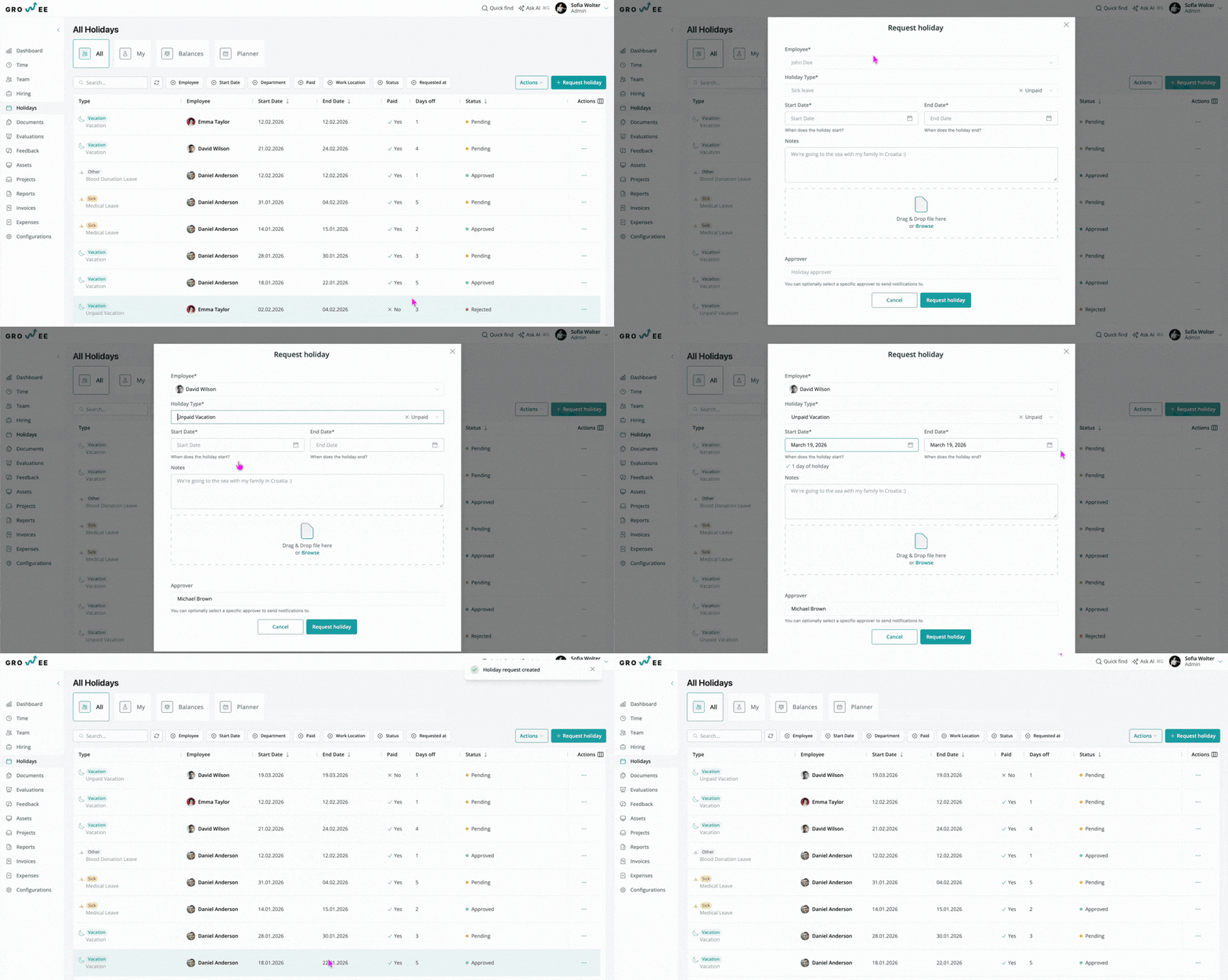
By removing the friction from the holiday request process, you foster a culture of trust and autonomy that is essential for a healthy, high-performing workforce. Moving away from “chaotic” to “coordinated” ensures that as your headcount grows, your administrative overhead does not grow with it, allowing the company to remain lean and agile.
Building a Scalable Foundation for the Future
The processes you settle for today set the standard for your company culture tomorrow. If you allow administrative chaos to become the norm during a growth spurt, it becomes significantly harder to implement discipline later on. Establishing a robust, automated workflow now ensures that your infrastructure is ready for the next 50 employees before they even sign their contracts.
It is about moving away from “just getting by” and toward building a professional environment where operations support, rather than hinder, the mission. By investing in the right systems early, you ensure that your team can focus on hitting milestones rather than navigating the logistics of their own time off. This foundation is what allows a company to transition from a messy startup to a high-performing, mature organization.
Moving Beyond the Spreadsheet
Scaling a company is about building systems that work while you sleep. Just as you would not manage a modern sales funnel without a CRM, or a hiring workflow without an ATS, managing your team’s well-being requires more than a shared calendar.
The transition from “chaotic” to “coordinated” happens when you empower employees to manage their own time, automate calculations, and give managers the bird’s-eye view they need to keep the gears turning. Integrating a dedicated leave management system ensures that as your headcount grows, your overhead doesn’t grow with it.
Is your team growing faster than your processes? It might be time to stop tracking and start managing.
Ready to stop the holiday tracking chaos and regain your time?
Turn automated approvals, real-time visibility, and error-free accruals into a seamless experience for your growing team.