
Most small businesses start with an informal approach to holiday. A rough entitlement, a shared calendar, and a general expectation that people will be reasonable. For a team of five or ten, that usually works.
Then the team grows. New hires join with different expectations. Managers start making inconsistent decisions. Someone in a different country has different statutory entitlements. A part-time employee asks how their allocation is calculated and nobody is entirely sure. The informal system that felt fine at ten people starts to buckle at thirty.
The problem isn’t that the policy was bad. It’s that it was never really built to scale.
What “Works” Actually Means at Scale
A holiday policy that works for a growing team isn’t necessarily complicated. But it does need to be clear, consistent, and capable of handling more variables than a startup-era approach was designed for.
Three things tend to break first as businesses scale:
Consistency. When leave decisions are made informally, different managers apply different standards. One approves a request without checking team coverage. Another declines the same request for a different employee in identical circumstances. Over time, employees notice, and perceived unfairness becomes a retention problem.
Clarity. Vague policies create questions. What counts as a working day for a part-time employee? Does carry-over expire? What happens to accrued leave when someone resigns? If your policy doesn’t answer these, HR fields the questions individually, and the answers may not always be the same.
Compliance. As headcount grows, so does the legal complexity. Different contract types carry different entitlements. Operating across regions means navigating different statutory minimums. A policy that worked for a homogeneous team in one location may not hold up when the workforce is more varied.
Common Holiday Policy Gaps by Business Size
Company Size | Typical Policy State | Most Common Gap |
1–15 employees | Informal, undocumented | No clear entitlement or process |
15–40 employees | Basic written policy | Carry-over rules missing or unclear |
40–100 employees | Policy exists but inconsistently applied | Part-time proration errors |
100–250 employees | Multiple policies, poorly coordinated | Cross-region compliance gaps |
250+ employees | Formalised but often outdated | Policy hasn't kept pace with growth |
The Core Elements Every Scaling Team Needs
A clear entitlement structure
How many days does each employee get? Is it a fixed annual allocation or does it accrue over time? Does it differ by contract type, seniority, or length of service?
These don’t need to be complicated decisions, but they do need to be decisions — written down, consistently applied, and communicated clearly to every new hire from day one. Ambiguity here is the root cause of most leave disputes.
Defined carry-over rules
Carry-over is one of the most common sources of confusion and grievance. Employees assume unused days roll over. Employers assume they don’t. Neither assumption is clearly communicated, and by January the disagreement becomes HR’s problem to unpick.
A working policy specifies: how many days, if any, can carry over; whether they expire and when; and how they’re tracked. This isn’t punitive, it’s protective — for both sides.
A documented approval process
Who approves leave? What’s the turnaround time? What happens when someone’s manager is unavailable? What criteria are used when two people request the same period?
Employees shouldn’t have to guess at the answers. And managers shouldn’t be improvising them. An approval process that’s written down and consistently followed removes a significant source of friction and perceived unfairness.
Coverage minimums
Some businesses need a minimum number of people available at any given time. Others have specific periods where leave is restricted — end of financial year, peak trading seasons, project-critical sprints.
If those coverage requirements exist, they need to be in the policy. Ad hoc restrictions announced after a request has been submitted create resentment. Clear upfront rules do not.
Separate leave types
Annual leave is one category. Sick leave is another. Parental leave, compassionate leave, unpaid leave, and public holidays are all distinct. A policy that conflates them, or doesn’t address them individually, creates gaps that surface at the worst possible moments.
Each leave type should have its own rules: entitlement, process, pay implications, and any interaction with annual leave balance.
What a Complete Holiday Policy Should Cover
Policy Element | What to Define | Why It Matters |
Annual entitlement | Days per year, by contract type | Sets clear expectations from day one |
Accrual method | Fixed allocation vs. accrual over time | Affects how leave is earned and tracked |
Carry-over rules | Maximum days, expiry date | Prevents disputes at year-end |
Approval process | Who approves, turnaround time, criteria | Ensures consistency across managers |
Coverage minimums | Restricted periods, minimum headcount | Protects business continuity |
Leave types | Annual, sick, parental, unpaid, compassionate | Avoids conflation and gaps |
Statutory compliance | Country and region-specific requirements | Reduces legal and tribunal risk |
The Policies Most Scaling Teams Get Wrong
Treating all employees the same regardless of contract type. A full-time employee and a four-day-a-week employee have different entitlements, even if the nominal number of days looks similar. Part-time employees are entitled to a pro-rata allocation, and failing to calculate this correctly is one of the most common compliance errors growing businesses make.
Ignoring statutory requirements in new locations. Expanding into a new country or hiring a remote employee abroad is exciting. Figuring out their leave entitlement is less so. But statutory minimums, public holiday obligations, and sick leave rules vary significantly by jurisdiction. Assuming your existing policy covers them is a risk.
Leaving unlimited PTO undefined. Some businesses adopt unlimited leave policies with good intentions. Without structure, though, employees often take less leave, not more, because there’s no clear norm and taking too much feels uncertain. An unlimited policy still needs guidelines: how requests are approved, what minimum time off looks like, and how coverage is managed.
Not revisiting the policy as the business changes. A policy written at twenty people may not reflect the business at a hundred. Workforce composition changes, regulations change, and what was a sensible rule for one phase of growth may create problems in the next. A policy that’s never reviewed is a policy that’s quietly drifting out of alignment with reality.
Fixed Allocation vs. Accrual: Which Model Fits Your Team
Factors | Fixed Annual Allocation | Accrual-Based |
How it works | Full entitlement granted at start of year | Leave builds up over time worked |
Best suited for | Stable, full-time workforce | Teams with frequent new starters or leavers |
Admin simplicity | High — easy to communicate and track | Lower — requires ongoing calculation |
Fairness on exit | Can overpay if employee leaves early | Pays out only what has been earned |
Part-time suitability | Requires pro-rata adjustment | Naturally reflects hours worked |
Common risk | Employees banking leave and taking it all at once | Complexity without automated tracking |
How Your Systems Need to Keep Up
A well-written policy is only as effective as your ability to apply it consistently. That’s where most scaling teams hit a second wall.
Manual systems, spreadsheets, and email approval chains can’t enforce policy automatically. They rely on the person updating the spreadsheet knowing the rules, applying them correctly, and catching their own mistakes. As the team grows and the variables multiply, that becomes harder to guarantee.
The businesses that scale leave management well tend to do a few things differently. They configure their policies in a system that applies the rules automatically, so a part-time employee accrues the right amount without anyone doing the calculation manually. Approvals route to the right manager without anyone forwarding an email. Carry-over limits enforce themselves at year-end. Employees can see their balance in real time without asking HR.
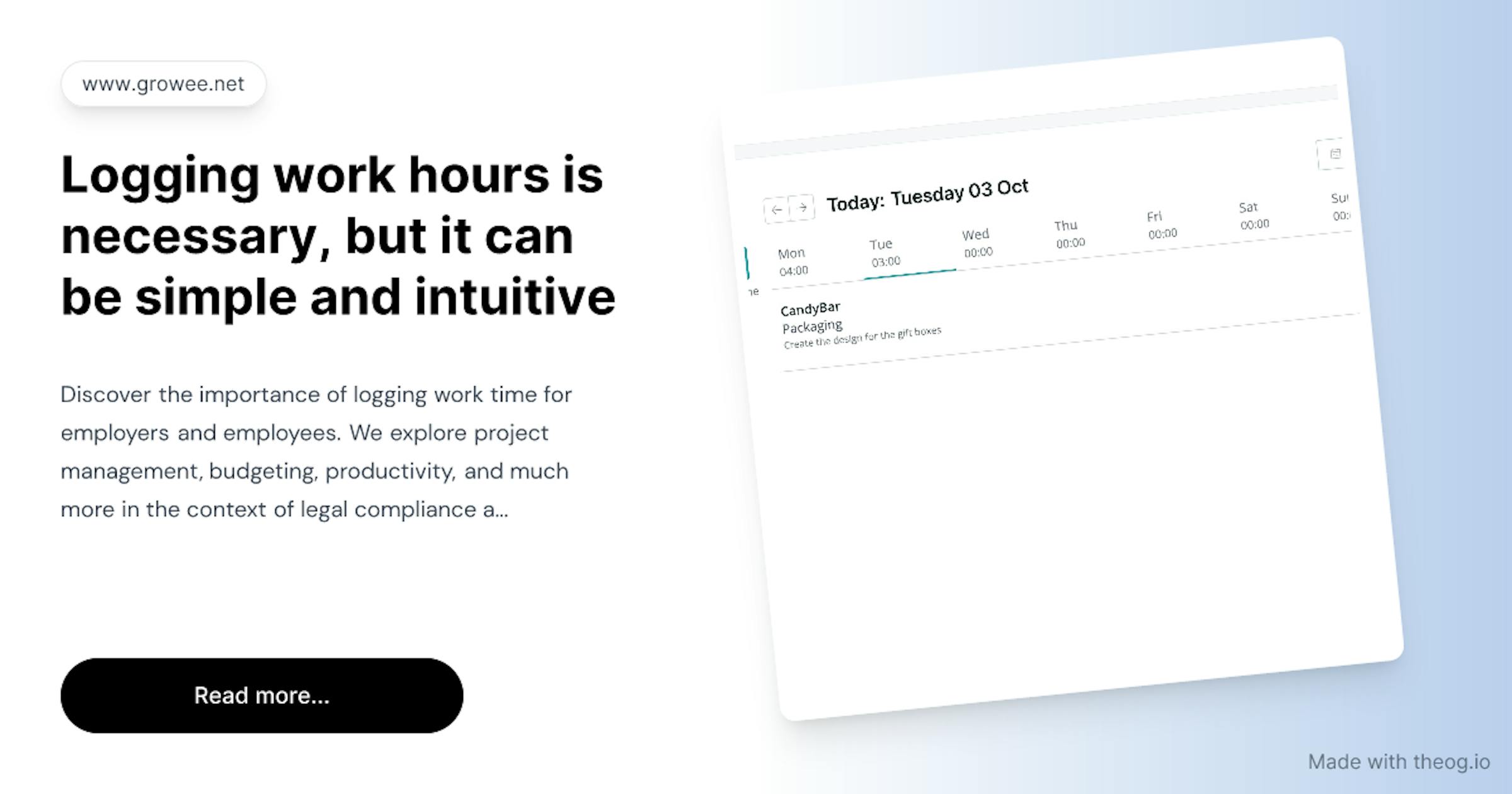
Growee’s leave management system is built for exactly this stage of growth: past the point where a spreadsheet is adequate, but without the complexity of large-scale HR software. Configurable policies per contract type, automated accruals, and a visual team planner mean the policy you write actually gets applied, consistently, to everyone.
Getting the Policy Right Before You Need To
The best time to formalise your holiday policy is before the informal approach breaks. Before the first dispute. Before the compliance question you can’t answer. Before the manager who’s been making judgement calls moves on and takes all the institutional knowledge with them.
That’s not always how it happens. Most businesses formalise under pressure, which means doing it quickly and reactively rather than thoughtfully. The result is a policy that addresses the immediate problem but misses the bigger picture.
If your team is growing and your current approach is “we figure it out as we go”, now is a reasonable time to revisit it. Not because something has gone wrong, but because it will, eventually, and a clear policy is significantly easier to put in place before the chaos than after it.
Ready to build a holiday policy your team can actually rely on?
Stop patching gaps as they appear and put a system in place that scales with your business from day one.