
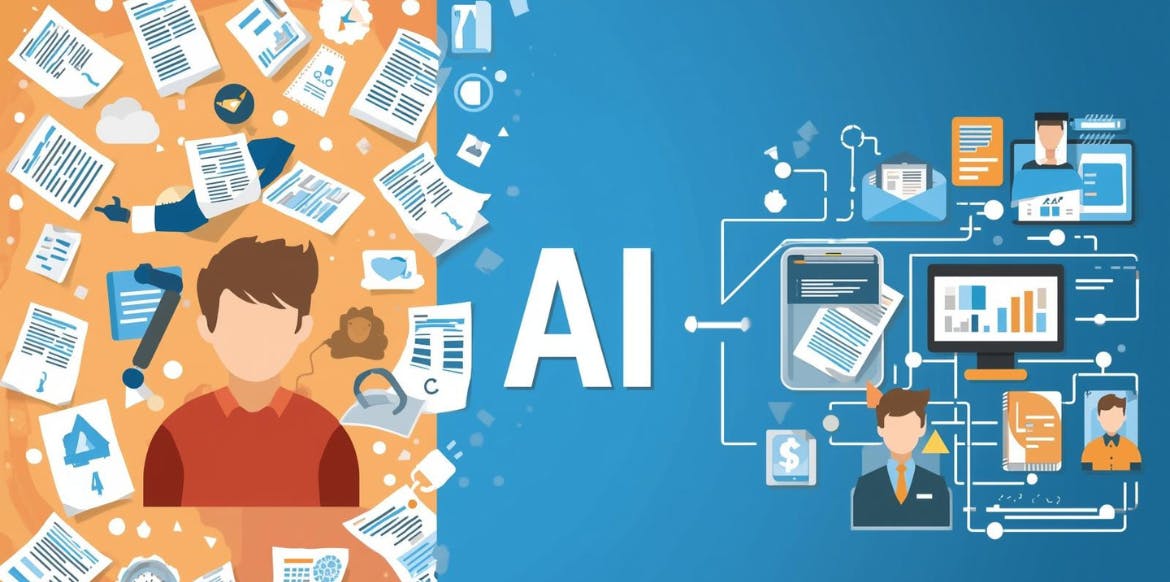
Picture this: It’s Monday morning, and you’re staring at 347 new applications for a single Software Developer role. Your hiring manager is breathing down your neck about time-to-fill metrics, adding pressure to make quick decisions without sacrificing quality. Enter AI recruiting tools, promising to screen those applications in minutes rather than days.
It sounds like the perfect solution. And in many ways, it is. But here’s where it gets tricky. While AI can quickly sort through resumes and identify candidates with the right keywords, it can’t read between the lines. It doesn’t know that the career-changer with an unconventional background might bring exactly the fresh perspective your team needs. It can’t sense the passion in a candidate’s cover letter or recognize potential in someone who took a non-traditional path.
AI in recruiting is incredibly powerful, but it’s also a double-edged sword. Use it right, and it frees you up to have more meaningful conversations with candidates. Use it wrong, and you risk turning your hiring process into a soulless numbers game that repels top talent and damages your employer brand. This article will walk you through the real benefits and genuine risks of AI recruiting, plus give you a practical framework for human centered AI that enhances rather than replaces your human judgment. By the end, you’ll have a clear roadmap for using AI as your assistant, not your replacement.
Quick Read: AI can dramatically speed up recruiting by handling resume screening, scheduling, and data analysis, but it can’t replace human judgment, empathy, or the ability to “read between the lines.” The best hiring processes use AI as an assistant - filtering volume, surfacing patterns, and providing structured insights - while people stay in charge of interviews, decisions, and fairness. Tools like Growee’s Hiring + AI module embody this balance by giving recruiters a clear view of the pipeline on one side and an AI assistant on the other, so they can move faster without losing the human connection that actually wins great talent.
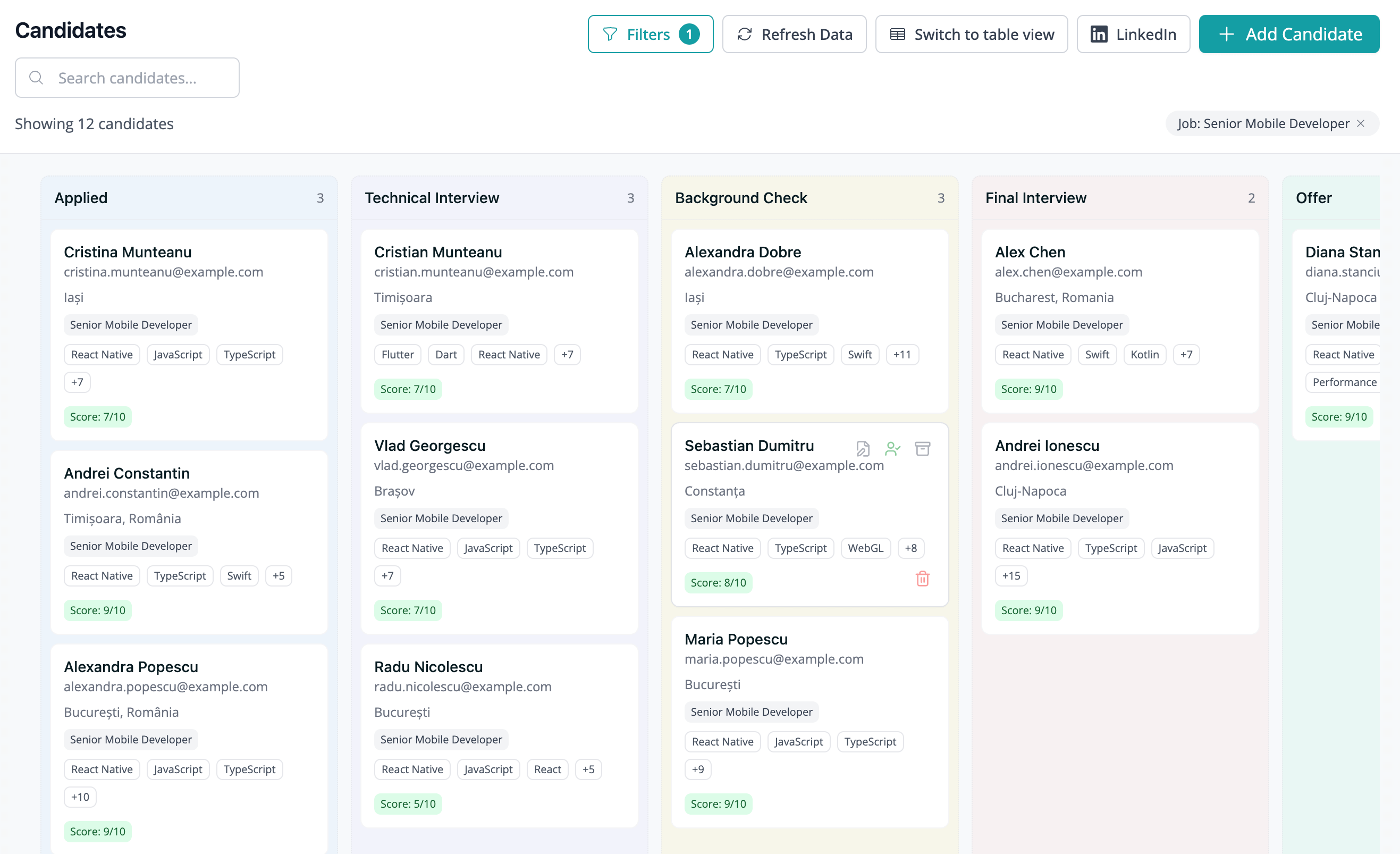
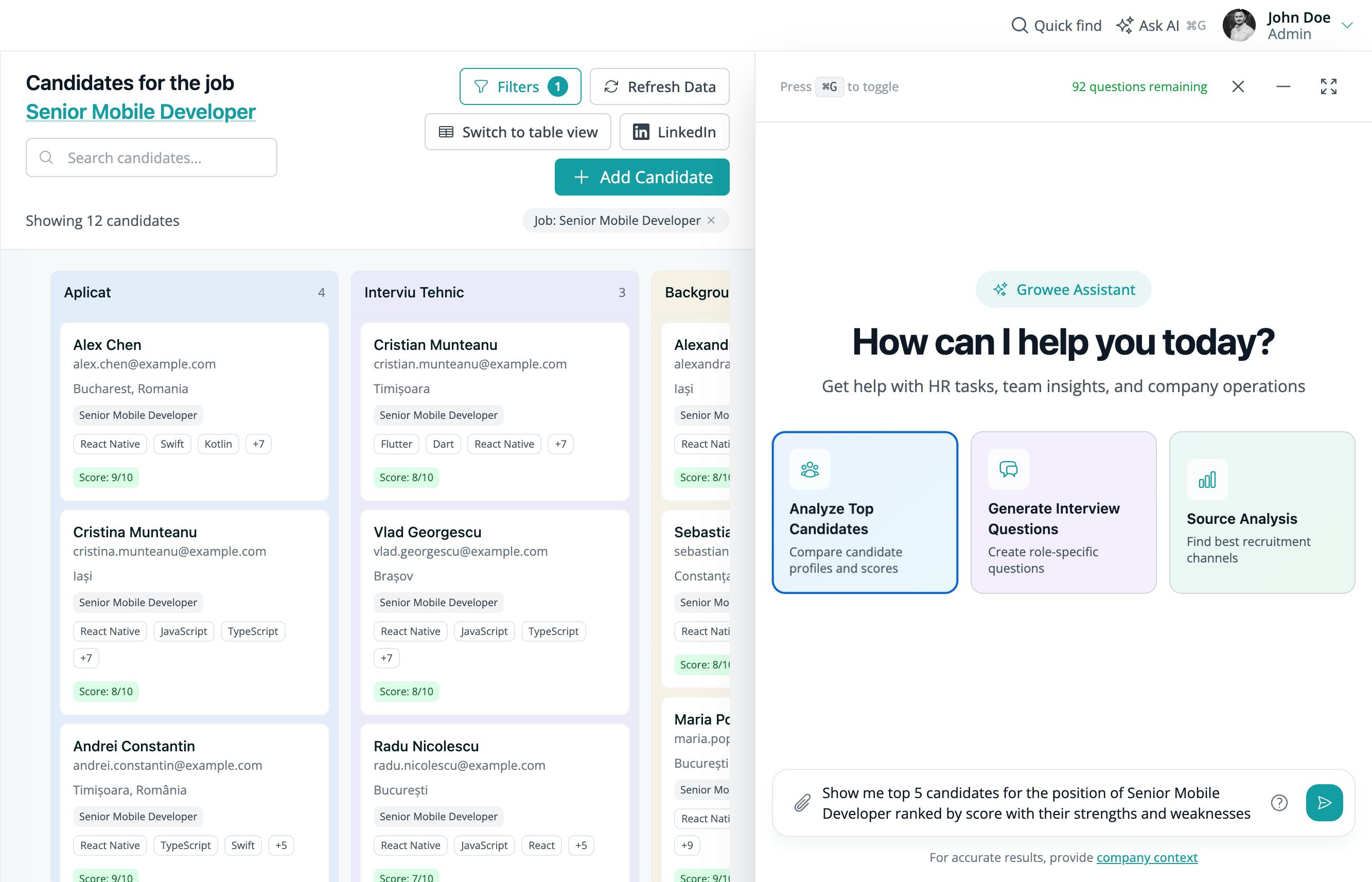
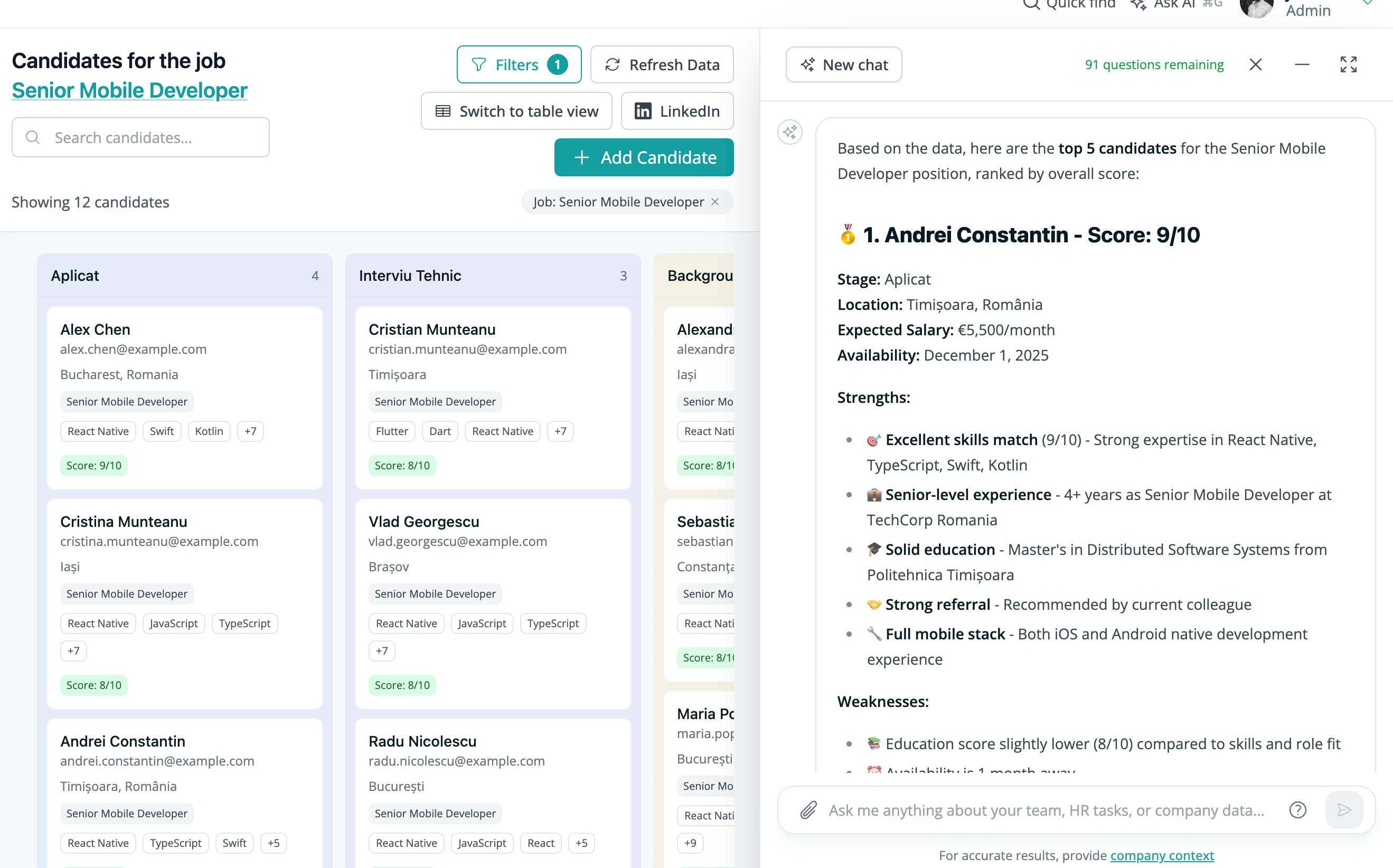
One example of this human-centered approach is the Hiring + AI module in Growee. Instead of replacing recruiters, Growee surfaces insights from the candidate data you already have. Your full pipeline for a role sits on one side of the screen: stages, skills, scores, and history in a clean, Kanban-style view - while Growee Assistant lives on the other, ready to compare profiles, highlight the most promising candidates, and summarize strengths and risks in plain language. The goal mirrors the message of this article: AI for speed and clarity, humans for empathy and judgment.
The Rise of AI in Recruiting
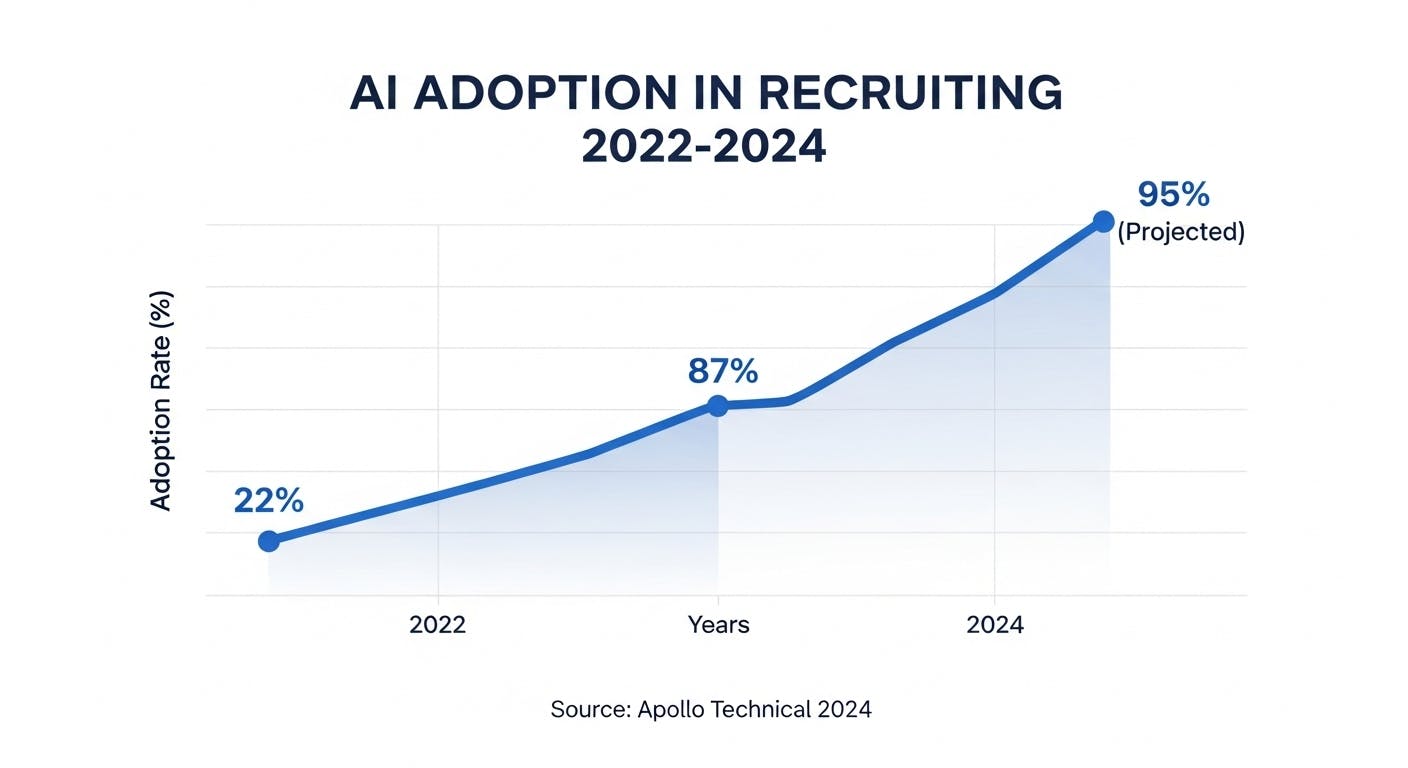
If you’re wondering whether AI in the recruiting world is just hype, the numbers tell a different story. According to Apollo Technical, 87% of companies are already using AI-driven recruiting tools in some capacity. This isn’t future speculation - it’s happening right now.
The adoption has been swift for good reason. 63% of recruiters are already using AI to automate routine tasks, freeing them up for higher-value activities like relationship building and strategic hiring (Apollo Technical). Common applications include:
- Resume screening and parsing - automatically extracting key information and filtering candidates
- Chatbots for initial candidate questions - handling FAQs and basic scheduling
- Interview scheduling - coordinating calendars without the back-and-forth emails
- Skills assessments - standardized testing with instant scoring
- Candidate sourcing - mining databases and social profiles for potential matches
The trend toward recruitment automation isn’t slowing down either. With generative AI adoption growing by 65% between 2023 and 2024 according to AmplifAI research, recruiters are increasingly turning to AI to handle the volume and speed demands of modern hiring.
But adoption rates only tell part of the story. The real question isn’t whether AI is being used - it’s whether it’s being used well.
What AI Can Actually Do in the Hiring Funnel
To use AI effectively in recruiting, you need to understand what it actually does best. Let’s break down the specific capabilities that can genuinely improve your hiring process.
Resume Parsing and Screening
AI excels at extracting structured data from unstructured resumes. It can quickly identify years of experience, specific skills, education credentials, and employment history across different resume formats. This AI resume screening capability means you can process hundreds of applications in the time it would take to manually review a few dozen.
More importantly, AI provides consistency. Where human reviewers might miss key qualifications when they’re tired or stressed, AI applies the same criteria to every single resume.
Candidate Scoring and Ranking
AI candidate matching works by identifying patterns between successful hires and new applicants. The system analyzes factors like skill combinations, career progression, and education backgrounds to generate match scores.
But here’s the crucial point: AI gives you signals, not absolute truths. A low AI score doesn’t mean someone can’t do the job - it means they don’t fit the historical pattern of your previous hires. That could be exactly what you need to bring fresh perspectives to your team.
Talent Sourcing and Rediscovery
AI can search your existing candidate database and identify past applicants who might be perfect for new roles. It can also scan social profiles and professional networks to surface potential candidates you might never have found manually.
This recruiting software capability is particularly valuable for uncovering hidden talent pools - like that great candidate who applied six months ago for a different role but would be perfect for your current opening.
Interview Prep and Structured Question Generation
AI can suggest interview questions based on role requirements and help ensure consistency across multiple interviewers. Some platforms can even analyze interview recordings to provide insights on candidate responses.
However, the actual conversation should always remain human-led. AI can provide the framework, but you need to read body language, ask follow-up questions, and assess cultural fit.
Scheduling and Automated Reminders
This is where AI shines brightest - handling the administrative burden that eats up recruiter time. Automated scheduling, confirmation emails, and reminder notifications free you up for activities that actually require human judgment.
Analytics and Forecasting
AI can track which job boards generate the best candidates, predict time-to-fill based on role characteristics, and identify bottlenecks in your hiring funnel. This HR technology helps optimize your recruiting strategy over time with data rather than guesswork.
The Benefits of AI in Recruiting
When implemented thoughtfully, AI can transform your recruiting process in several meaningful ways.
Speed and Reduced Time to Hire
The most immediate benefit is speed. What used to take days now takes hours. AI recruiting tools can screen 100 resumes in the time it takes to manually review 5, and automated scheduling eliminates the email tennis that often delays interviews.
This speed matters competitively. In today’s tight talent market, the difference between reaching out to a candidate on day 1 versus day 5 can be the difference between landing them or losing them to a faster competitor. According to Apollo Technical, 66% of organizations using AI report reduced hiring costs, partly due to shorter time-to-fill periods.
Handling Volume Without Burnout
High-volume roles like customer service or sales can generate thousands of applications. AI makes this manageable by doing the initial filtering that would otherwise overwhelm human recruiters.
More importantly, AI maintains consistency across large volumes. While a human reviewer might get less thorough after screening 50 resumes, AI applies the same criteria to candidate 1 and candidate 1,000.
More Consistent, Data-Informed Decisions
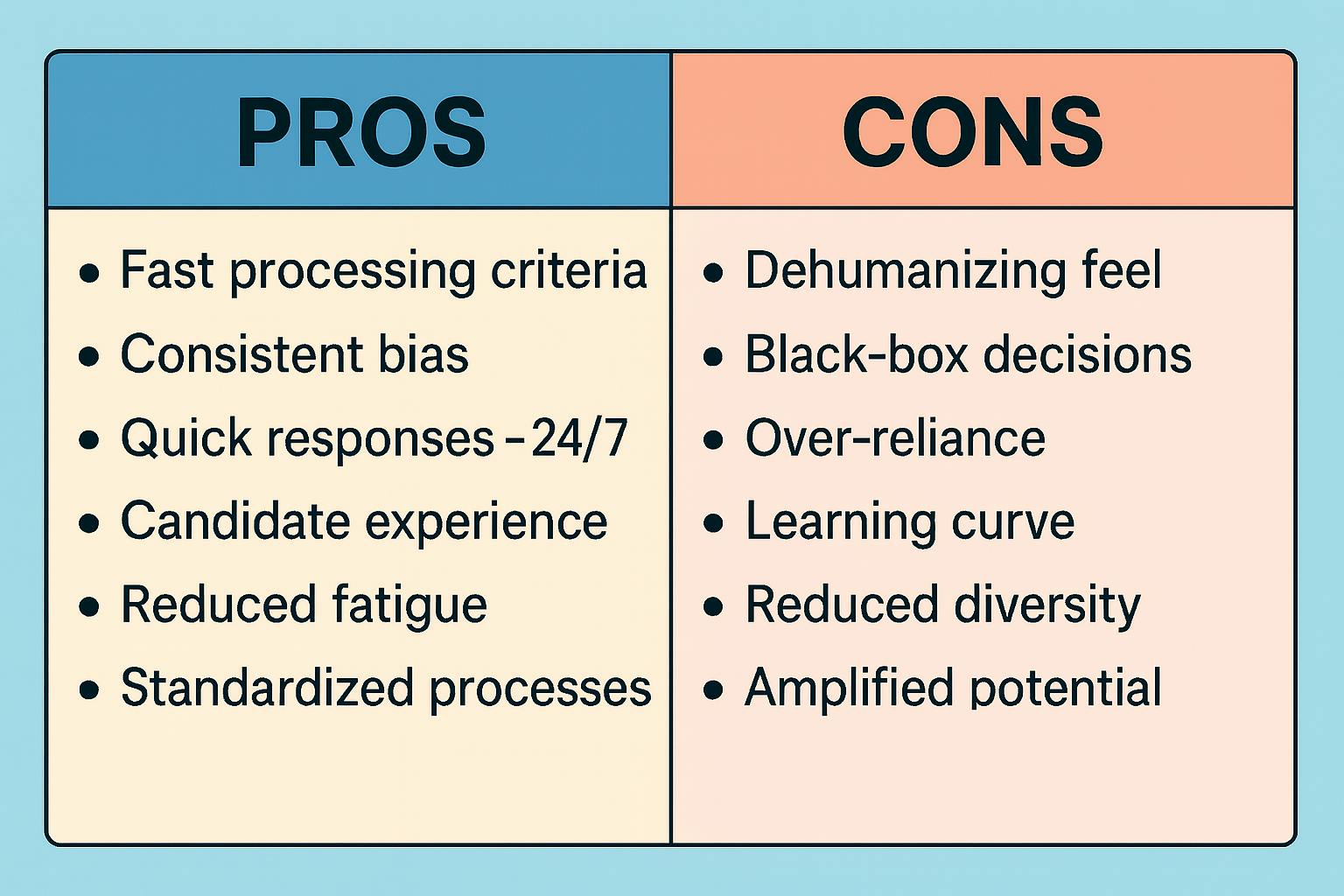
AI enforces standardized evaluation criteria, reducing the impact of unconscious bias and “gut feel” decisions that can vary based on the interviewer’s mood or energy level.
43% of recruiting firms report higher quality of hire when using AI tools (Apollo Technical), likely because the technology helps maintain consistent standards while reducing human decision fatigue. Remember though: AI provides data points, not final answers. The goal is better information to inform human decisions, not to replace human judgment entirely.
Less Admin, More Human Interaction
This might be the biggest win. By automating resume parsing, scheduling, and status updates, AI frees recruiters to spend more time on activities that genuinely require human skills: building relationships, conducting thoughtful interviews, and providing strategic hiring advice.
When AI handles the busywork, recruiters can focus on being strategic partners rather than administrative processors.
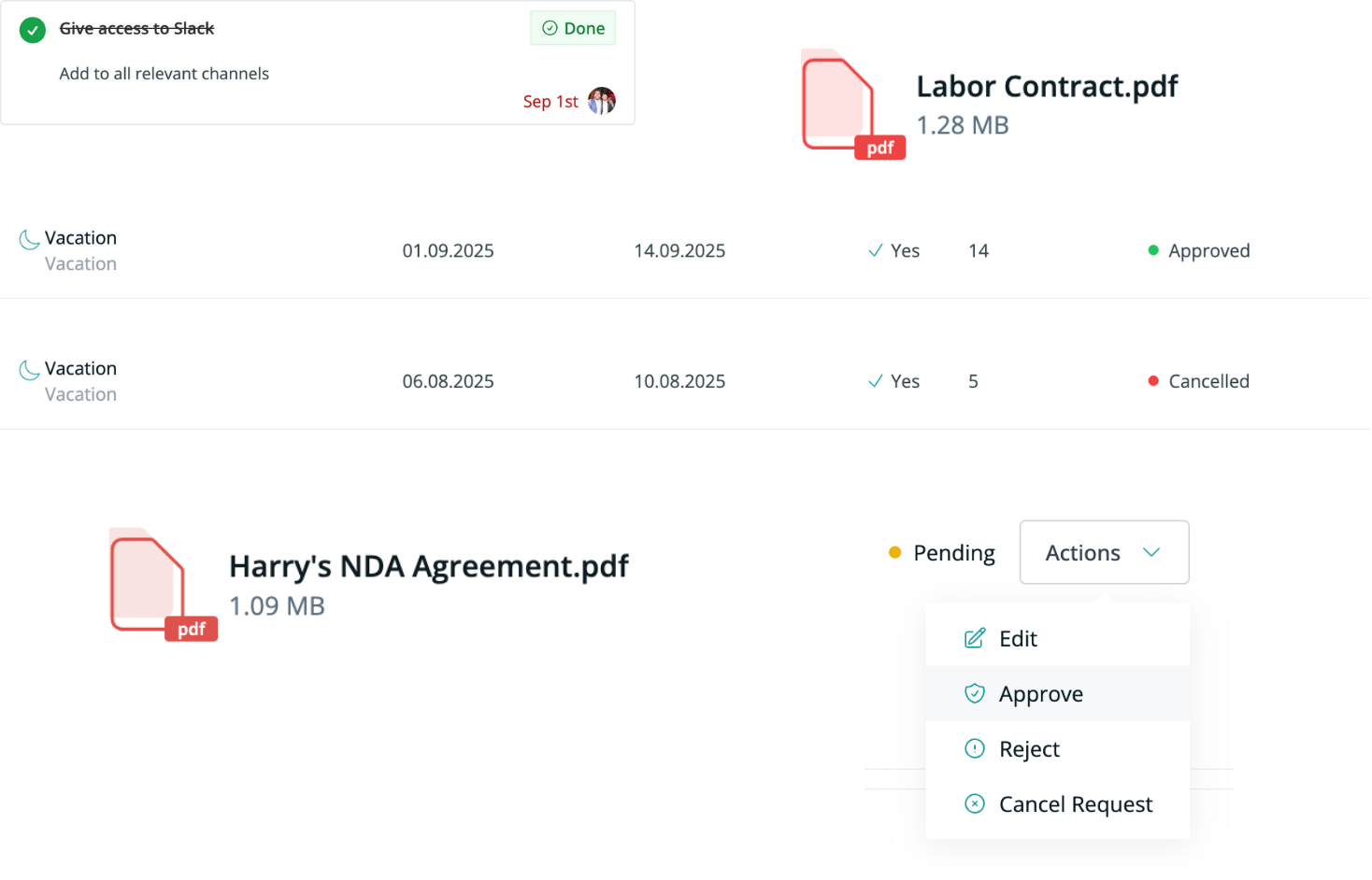
Tools like Growee are designed specifically for this kind of balance. In the Hiring + AI module, recruiters can simply ask, “Show me the top 5 candidates for Senior Mobile Developer,” and Growee Assistant reviews the pipeline, ranks the best matches, and returns clear, structured summaries for each person - stage, location, expected salary, availability, strengths, and potential risks. Recruiters stay in control of the decision, but they no longer spend hours manually scanning cards and notes to build a shortlist. These screenshots are just a small peek at how teams can hire smarter without losing the human connection that actually wins great talent.
Improved Candidate Experience at Scale
Properly implemented AI can enhance rather than degrade the candidate experience. Instant application confirmations, chatbots that answer common questions after hours, and faster response times all create a more responsive hiring process.
55% of companies report more diverse hires when using AI tools (Apollo Technical), partly because automated systems can reduce human bias in initial screening stages.
The Risks of Over-Relying on AI in Hiring
But AI isn’t magic, and over-reliance creates real risks that can damage your hiring process and employer brand.
Dehumanized Candidate Experience
When candidates feel like they’re interacting with bots instead of people, particularly for senior or relationship-heavy roles, it can signal that your company doesn’t value human connection. This is especially damaging when competing for top talent who have multiple options.
Nobody wants to feel like they’re just a data point in an algorithm, particularly when they’re considering a major career decision.
Bias and Fairness Concerns
AI learns from historical hiring data, which means it can perpetuate or amplify existing biases. If your past hiring skewed toward certain schools, demographics, or backgrounds, AI will likely favor similar candidates in the future.
This creates both hiring bias issues and growing legal exposure. As regulations around AI in hiring tighten, companies using “black box” AI systems may find themselves unable to explain their hiring decisions in compliance audits. For example, if an AI system consistently ranks candidates from certain universities higher based on historical data, it could unlawfully discriminate against qualified applicants from diverse backgrounds.
Black Box Decisions and Lack of Transparency
When AI rejects candidates with no clear explanation, it creates trust problems for candidates, hiring managers, and even recruiters themselves. “The algorithm said no” isn’t a satisfying answer for anyone involved.
This transparency challenge becomes particularly problematic when you need to provide feedback to candidates or justify hiring decisions to stakeholders.
The AI Arms Race with Candidates
As more candidates use AI to optimize their resumes and cover letters for keyword matching, the signal-to-noise ratio deteriorates. You might end up with perfectly optimized applications that tell you nothing about genuine fit or motivation.
This creates an escalating cycle where both sides use increasingly sophisticated AI, but the actual quality of matches doesn’t necessarily improve.
Reputation Risk from Over-Automation
Automation failures - like chatbots giving wrong information, automated emails with incorrect details, or systems that ghost candidates - can quickly damage your employer brand.
Social media amplifies these failures, and one bad candidate experience can reach thousands of potential applicants through platforms like LinkedIn or Glassdoor.
How to Balance AI and Human Judgment
The key to successful AI in recruiting is treating it as a powerful assistant, not a replacement for human insight. Here’s a practical framework.
Use AI as a Filter, Not a Final Judge
Think of AI as your initial screener that identifies the “maybe” pile - candidates worth human review. The AI ranking helps you prioritize who to look at first, but humans make the actual decisions about who moves forward.
For example, let AI screen 500 applications down to the top 50 based on hard qualifications, then have humans review those 50 to identify the top 15 for phone screens based on nuanced factors like career trajectory, motivation indicators, and potential fit.
Keep Humans in Charge of Interviews, Hiring Decisions and Offers
AI can suggest interview questions and provide candidate summaries, but the actual conversations should be human-led. This is where you assess communication skills, cultural fit, problem-solving approach, and other qualities that can’t be captured in a resume.
Final hiring decisions should always involve human judgment about factors like team dynamics, growth potential, and long-term fit that go beyond what AI can evaluate.
Be Transparent with Candidates About Where AI Is Used
Build trust by clearly communicating when and how you use AI in your process. You might include language like: “We use AI tools to help us review applications more efficiently, but all hiring decisions are made by our human recruiting team.”
This transparency shows respect for candidates while setting appropriate expectations about your process.
Regularly Audit AI Outputs for Fairness and Accuracy
Don’t set and forget your AI systems. Regularly review which candidates are being filtered out and look for patterns that might indicate bias. Check whether AI recommendations align with successful hires over time.
Consider doing quarterly audits where you manually review a sample of AI-rejected candidates to see if the system is missing good fits.
Train Recruiters to Understand AI Scores and Know When to Override
Your recruiting team should understand what factors drive AI scores and feel empowered to override them when human judgment suggests a different decision. The goal is recruiters as informed partners with AI, not passive followers of algorithmic recommendations.
Provide training on when AI insights are most reliable (hard skills matching) versus when human judgment is crucial (cultural fit, motivation, potential).
A Sample Human-Centered, AI-Assisted Hiring Workflow
Here’s what a balanced approach looks like in practice, step by step.
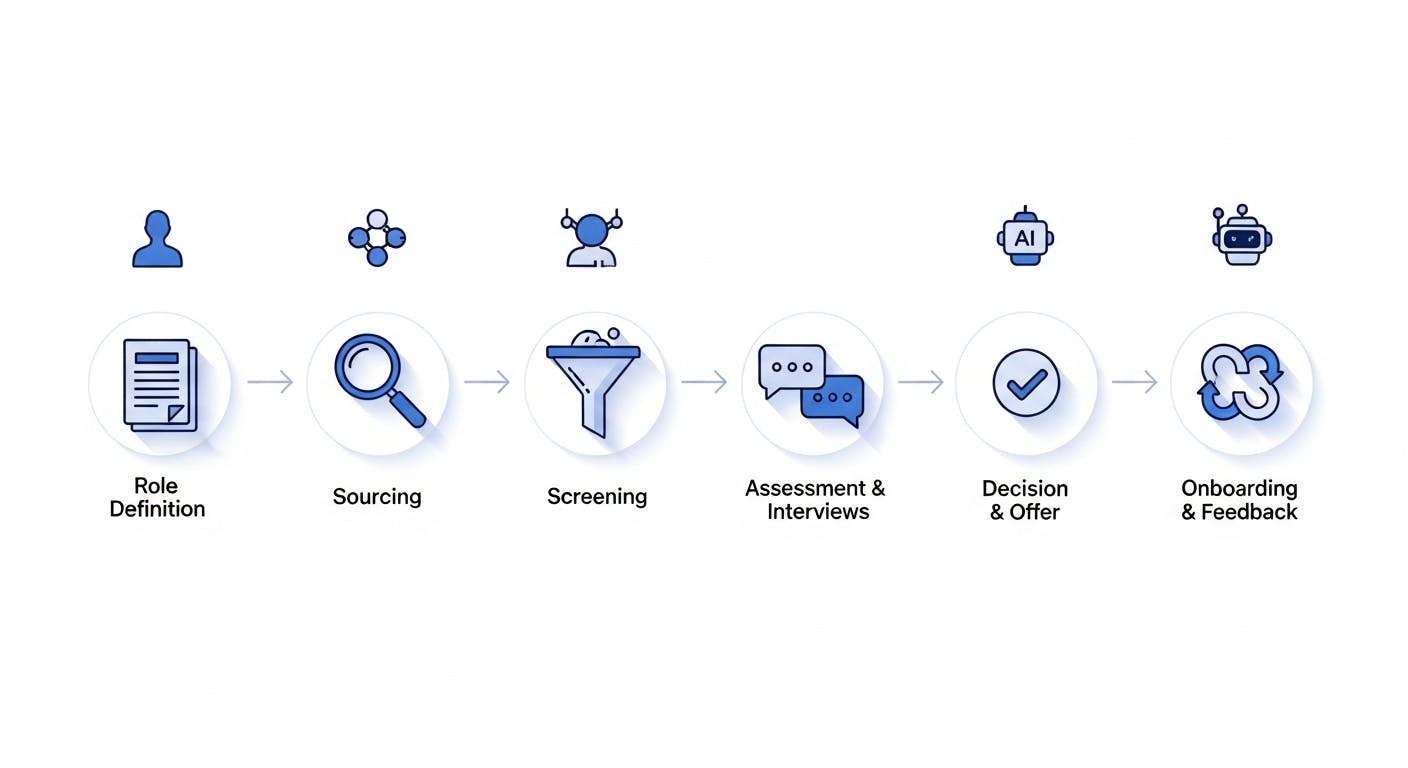
Step 1: Role Definition
Human: Hiring manager and recruiter collaborate to define role requirements, must-haves versus nice-to-haves, and team fit factors.
AI: Provides market data on skill combinations, salary benchmarks, and time-to-fill expectations to inform realistic requirements.
The human insight ensures the role definition reflects actual team needs and company culture, while AI provides market context to set realistic expectations. This balanced start sets the foundation for effective sourcing.
Step 2: Sourcing
AI: Searches candidate databases, identifies past applicants who might fit new roles, and suggests sourcing channels based on successful hire patterns.
Human: Crafts personalized outreach messages, leverages network relationships, and makes judgment calls about non-obvious candidates who might be worth pursuing.
This combination maximizes reach while maintaining the personal touch that attracts top candidates. From here, the process moves to efficient screening.
Step 3: Screening
AI: Ranks applications based on qualifications matching and provides initial filtering to manage volume.
Human: Reviews top-ranked candidates and manually examines edge cases where someone might not score well algorithmically but shows promise (career changers, non-traditional backgrounds, unique experiences).
The AI helps prioritize review time while humans catch potentially great candidates who don’t fit historical patterns. This leads naturally into more in-depth assessments.
Step 4: Assessment and Interviews
AI: Suggests structured interview questions based on role requirements and provides candidate background summaries to prepare interviewers.
Human: Conducts actual interviews, asks follow-up questions, assesses communication style and cultural fit, and makes nuanced judgments about potential and motivation.
AI provides structure and consistency while humans handle the relationship-building and complex evaluation that requires emotional intelligence. These insights feed into informed decision-making.
Step 5: Decision and Offer
AI: Compiles structured summaries of candidate feedback, interview scores, and assessment results to support decision-making.
Human: Makes final hiring decisions based on holistic evaluation including factors like team chemistry, growth potential, and strategic fit that go beyond quantifiable metrics.
Human judgment remains paramount for the final decision while AI provides organized data to inform that judgment. Once complete, focus shifts to onboarding and learning.
Step 6: Onboarding and Feedback Loop
AI: Tracks quality-of-hire metrics, performance outcomes, and retention data to continuously improve the screening and assessment process.
Human: Gathers qualitative feedback on new hire fit and performance to refine both human judgment and AI criteria over time.
This creates a learning system that improves both human and AI performance based on actual outcomes.
Conclusion
The future of recruiting isn’t human versus AI - it’s humans working smarter with AI as a powerful assistant. When you use AI in recruiting thoughtfully, it handles the time-consuming administrative work while freeing you up for the strategic relationship-building and nuanced decision-making that actually determine hiring success.
The key is remembering that AI excels at processing data and identifying patterns, but humans excel at reading between the lines, building relationships, and making complex judgments about fit and potential. The best recruiting processes leverage both.
Take a moment to review your current hiring process. Where are you spending time on manual work that AI could handle? Where are you making gut-feel decisions that could benefit from more structured data? The goal isn’t to replace human judgment, but to amplify it with better information and more time to focus on what matters most.
That’s the philosophy behind Growee’s Hiring + AI experience as well. By letting AI take over the repetitive analysis and surface the clearest picture of your pipeline, Growee gives recruiters more time for what only humans can do: reading between the lines, building trust with candidates, and making fair, thoughtful hiring decisions that stand up over time.
The organizations that get this balance right will have a significant competitive advantage in attracting and hiring the best talent. They’ll move faster than manual processes while maintaining the human connection that top candidates expect.
If you’re looking to implement human centered AI solutions that enhance rather than replace your team’s capabilities, explore BinarCode’s AI solutions for enterprise to design and build custom recruiting tools that put human judgment first while leveraging AI’s processing power. Our digital transformation services take a thoughtful approach to AI adoption that prioritizes both efficiency and human values. For custom implementations, check out our enterprise software development expertise.
Frequently Asked Questions
Q: How do I know if my current AI recruiting tools are working effectively?
A: Track quality-of-hire metrics like 90-day retention, performance ratings, and hiring manager satisfaction. Compare these metrics for AI-screened versus manually-screened candidates. Also monitor candidate feedback and application completion rates to ensure your AI isn’t creating a poor candidate experience.
Q: What’s the biggest mistake companies make when implementing AI in recruiting?
A: Treating AI as a “set it and forget it” solution. The biggest mistake is implementing AI screening without ongoing human oversight, regular bias audits, or training for recruiters on when to override AI recommendations. AI requires active management to remain effective and fair.
Q: Should small companies with limited hiring volume invest in AI recruiting tools?
A: For companies hiring fewer than 50 people per year, simple AI tools for resume parsing and scheduling can provide value without major investment. However, avoid complex AI screening systems until you have enough hiring data to train them properly. Focus on AI that handles administrative tasks rather than decision-making for smaller hiring volumes.
Sources Used in This Article:
- Apollo Technical: Statistics on AI in Recruiting (2024) - Used for adoption rates and quality metrics
- AmplifAI: Generative AI Statistics (2025) - Used for AI growth trends and economic impact data